


5S is a method for achieving a high-performance workplace.
It therefore becomes essential to eliminate all activities that constitute waste, which are very visible in a production setting but more hidden in the office world.
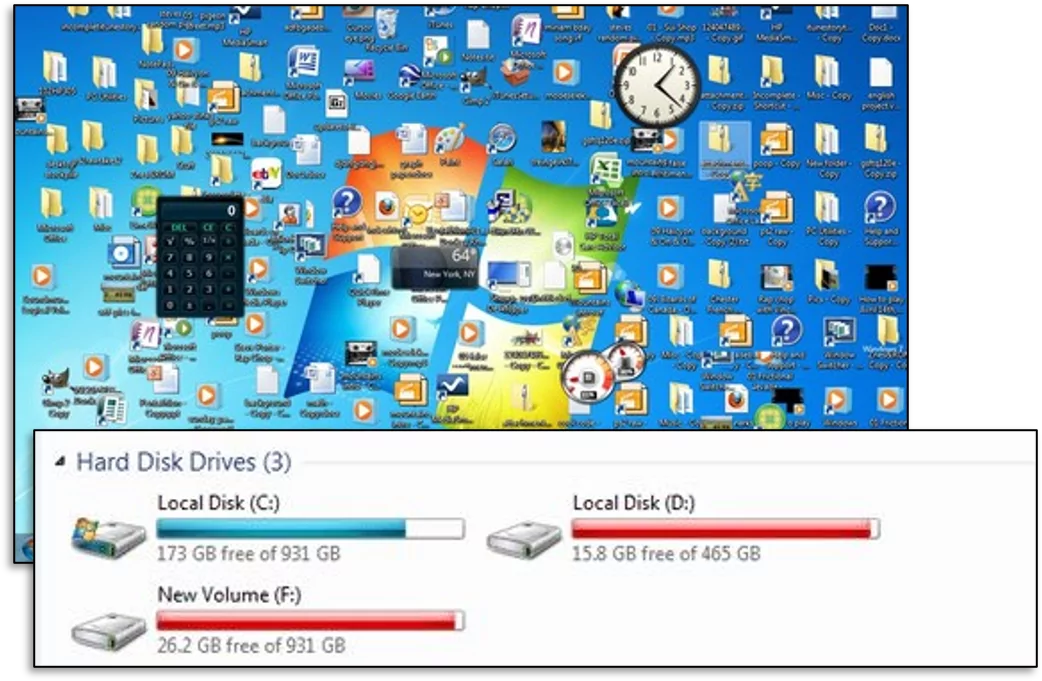
Let’s think for a moment about what we see when we switch on our computers:
Every mouse click is waste, and every file we open is a wait. Minimising these dynamics is part of the 5S approach just as much as the sorting phase within a production area.
The difficulty in seeing and managing these aspects lies in the fact that, mentally, virtual space seems infinite to us. We never get to the point of saying “We have no space”, because buying a new disk is much cheaper than buying a new warehouse!
So try asking yourself the classic 5S questions, but with a focus on digital:
1) SORT: are only the files and folders you need present?
2) SET IN ORDER: are they arranged according to a logic that takes into account location and frequency of use?
3) SHINE: is there a simple update and change plan in place, and is it followed?
4) STANDARDISE: are the architecture and naming of network files standardised?
5) SUSTAIN/IMPROVE: how do we ensure these conditions are maintained? And improved?
An example from a client company:
Starting point → 118 GB used, 78,300 folders, 320,000+ files
Work carried out → definition of the new network architecture and deletion of obsolete files
Future state → 90% fewer files and folders!
The term 5S Method comes from the initials of the Westernised pronunciation of the five Japanese words that summarise the five steps that set the pace of the methodology:
The fifth step (shitsuke) can also be understood as extending 5S from pilot experiments to other activities that can benefit from it.
This methodology therefore involves a company-wide attitude of continuous improvement, so that every day is a day for improving and for discovering other Muda and eliminating them: while the first three steps can be carried out with little effort, the heart of improvement and of the system lies in the last two, which make the activity constant and structural.
The 5S methodology sets out, in five steps, a systematic and repeatable method for optimising work standards and therefore improving operational performance.
Rooted in the Japanese tradition of eliminating all waste (muda), its aim is to eliminate everything that is not strictly necessary to the activity being carried out, regardless of the activity itself.
Federico Lazzarini
Federico Lazzarini è General Manager e consulente direzionale di fischer Consulting, con oltre 25 anni di esperienza in aziende industriali dei settori farmaceutico e manifatturiero, tra cui GlaxoSmithKline, Amcor e Aprilia. Lean Six Sigma Master Black Belt, si occupa di Lean Transformation, gestione delle Operations e Supply Chain.