
We eliminate inefficiencies in industrial processes
Business process consulting helps companies make their day-to-day activities more efficient, eliminating waste and simplifying the way work is done. The objective is to improve the flow of operations, reduce time and costs and increase the quality of the results.
By analysing internal procedures and involving company teams, fischer Consulting’s consultants identify where bottlenecks or inefficiencies arise and propose practical solutions to improve productivity. This approach makes it possible to standardise processes, facilitate collaboration between departments and create leaner management that is measurable and sustainable over time.
In short, business process consulting makes what already exists work better, helping the company to grow in an orderly and competitive way.
Why Us
The fischer Consulting method
fischer Consulting combines Lean methodologies, analysis tools and hands-on training to ensure tangible results.
Here is what sets us apart:
Process improvement methodologies
To improve their business processes, companies can adopt various well-established methodologies, each with a practical, results-oriented approach.
The most widely used include:
Lean Thinking
an approach focused on reducing waste and continuously improving workflows, with the aim of creating more value with fewer resources.
PDCA (Plan-Do-Check-Act)
a structured cycle for planning, executing, verifying and standardising processes, fostering continuous improvement.
A3 Problem Solving
a practical method for analysing complex problems, identifying their main causes and defining effective action plans.
Root Cause Analysis (RCA)
a technique for tracing back to the underlying problems that generate inefficiencies, preventing them from recurring.
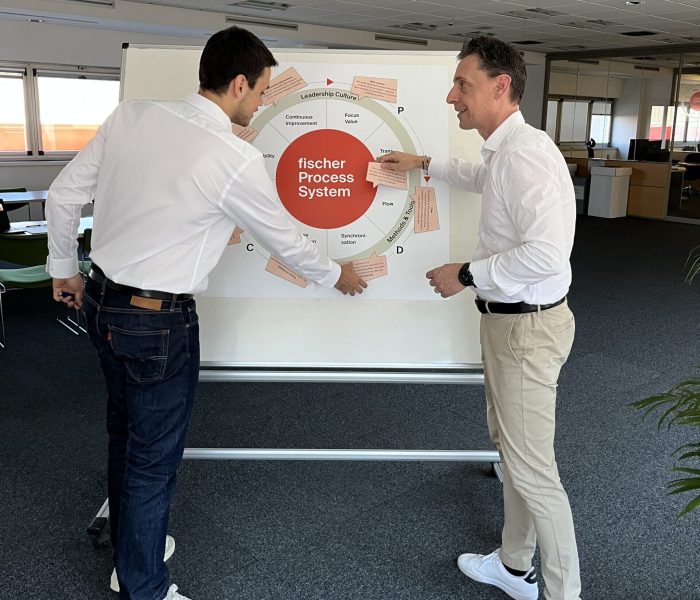
These methodologies are not alternatives to one another, but can be complementary. Combining several approaches makes it possible to address business processes in a structured way, improving both productivity and the quality of the results.
By combining Lean methodologies and practical tools, companies can map their value streams, standardise activities and monitor performance effectively, creating a culture of continuous improvement that is sustainable over time.
How do you optimise an industrial process?
Karakuri Kaizen is a continuous improvement methodology that uses simple, sustainable mechanisms to make processes leaner and more efficient. By harnessing natural forces such as gravity, friction or elasticity, it makes it possible to automate repetitive or strenuous tasks without resorting to complex or expensive technologies.
Applying Karakuri solutions means reducing waste and inefficiencies, improving workplace safety and ergonomics and fostering the engagement of staff, who become an active part of the improvement. Developed directly at the Gemba, these systems are a practical and accessible approach, even for small and medium-sized enterprises.
Fully in line with the principles of Industry 5.0, Karakuri Kaizen combines innovation with a human-centred approach, promoting intelligent collaboration between people and simple mechanisms to build processes that are more sustainable, adaptable and future-oriented.
our tools
Lean Tools for Process Improvement
Process improvement cannot be achieved through theory alone: concrete tools are needed to analyse, optimise and monitor business activities. Lean consultants use proven tools to ensure measurable, sustainable results, adapting them to the specific needs of each organisation.
The main tools include:
5S
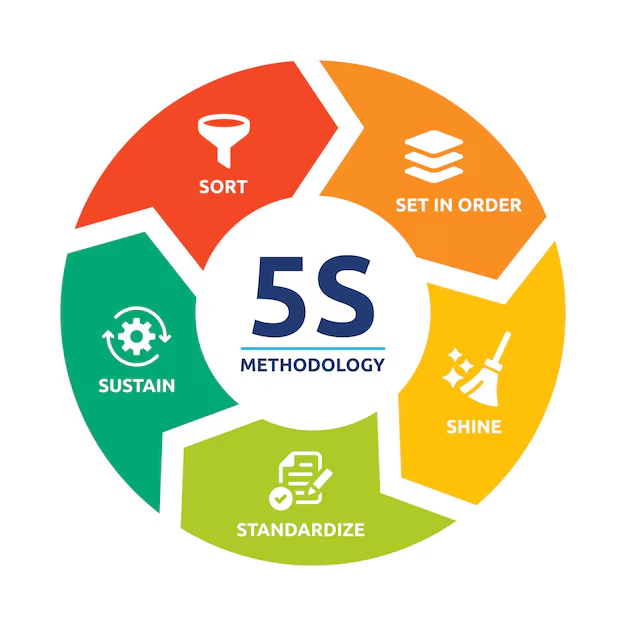
This method focuses on organising the workplace through Sort, Set in order, Shine, Standardise and Sustain, thereby reducing waste and increasing productivity (in Japanese: Seiri, Seiton, Seiso, Seiketsu, Shitsuke).
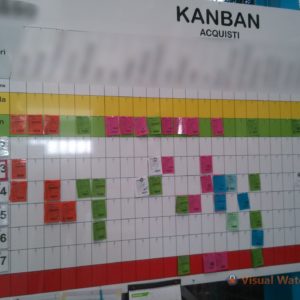
Kanban
Kanban is a visual method for managing production and workflow. Using cards and signals, Kanban helps to coordinate activities, reduce excess inventory and identify resource overload or under-utilisation.
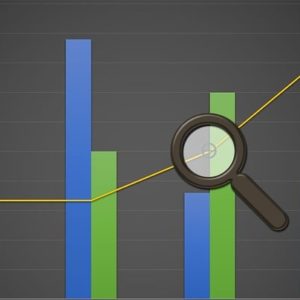
Yamazumi Chart
This tool is used to analyse and balance the workload between workstations in a production process. By visualising cycle times and activities, the Yamazumi Chart helps to identify critical points and optimise the allocation of resources.
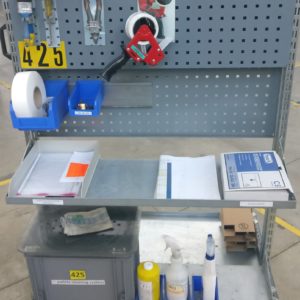
SMED (Single-Minute Exchange of Die)
SMED is a methodology for reducing changeover times between production runs. By optimising machine set-up and standardising procedures, companies can reduce downtime and increase operational flexibility.
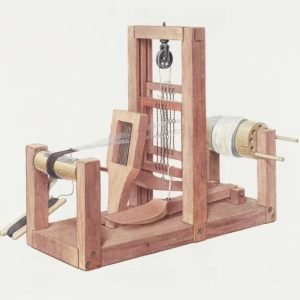
Jidoka
This concept refers to building quality into the production process, enabling machines to detect errors automatically and stop when a problem occurs. Applying Jidoka helps to ensure high-quality production and to prevent defects.
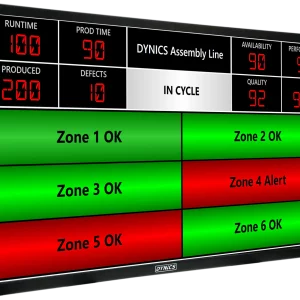
Andon
A visual signalling system used to communicate problems or anomalies in the production process immediately. Its implementation promotes transparency and responsiveness, enabling timely intervention to solve problems.
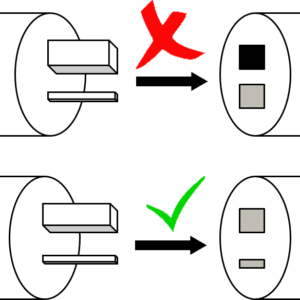
Poka-yoke
This technique aims to prevent errors or defects through the design of processes or devices that stop errors from occurring. Poka-yoke solutions are often implemented creatively to ensure that operations are carried out right first time.
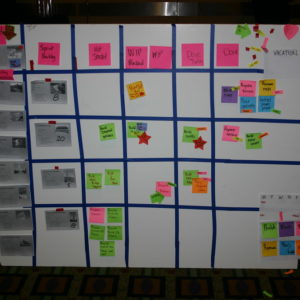
Visual Management
This approach uses signage, charts and visual indicators to communicate critical information on the status of processes and performance, helping to keep the focus on continuous improvement and fostering a results-oriented culture.
Case study
Sector
Chemical, microbiological and biochemical testing
Neotron’s success with fischer Consulting
fischer Consulting supported Neotron, an international leader in chemical, microbiological and biochemical testing, in optimising its laboratory processes. The project focused on introducing Lean Thinking, with the aim of eliminating waste, improving information flows and strengthening collaboration between departments. By applying the 5S model and continuous improvement methodologies, Neotron achieved concrete results:
- 15% reduction in lead times on the pilot line
- 100% ROI in just 10 months
- Greater order and safety in the working environment, as well as a widespread
- change in company culture that has made staff more aware when it comes to identifying efficient solutions.
A prime example of how the Lean approach can generate measurable value even in complex settings such as testing laboratories.
How do you monitor a business process?
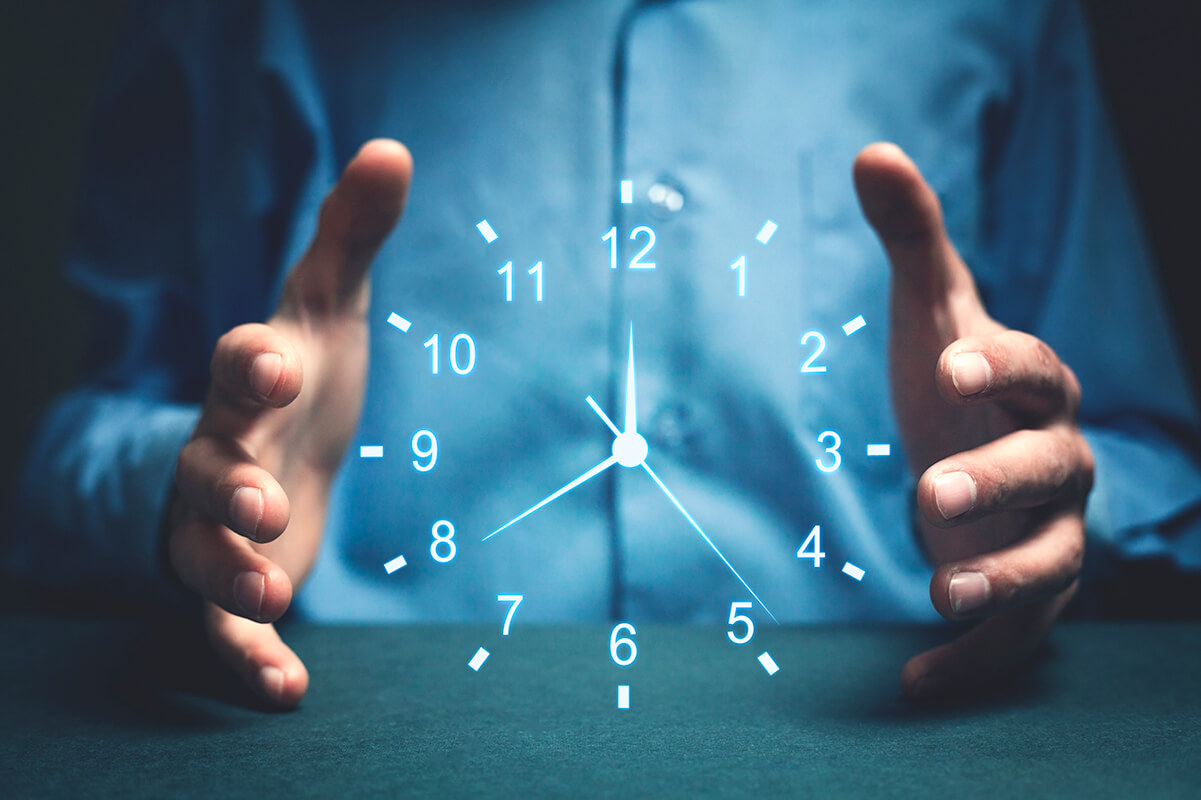
Monitoring process performance means using key indicators such as:
- Standard Cycle Times and Cycle Times: they measure the actual duration of activities;
- Takt Time: it defines the production pace needed to meet demand;
- Overall Equipment Effectiveness (OEE): it assesses the overall effectiveness of machines and plants.
These tools make it possible to map and understand processes, highlight waste and bottlenecks, and create a workflow that is leaner, more productive and aligned with business objectives.
By combining Lean methodologies and practical tools, companies can develop a culture of continuous improvement, in which every process is constantly monitored and optimised to obtain maximum value with minimum resources.
How to Map Business Processes
To improve processes, it is essential to visualise every activity and flow clearly. Mapping techniques make it possible to understand where inefficiencies, delays or overlaps arise, making the data immediately usable for concrete interventions.
The most effective techniques include:
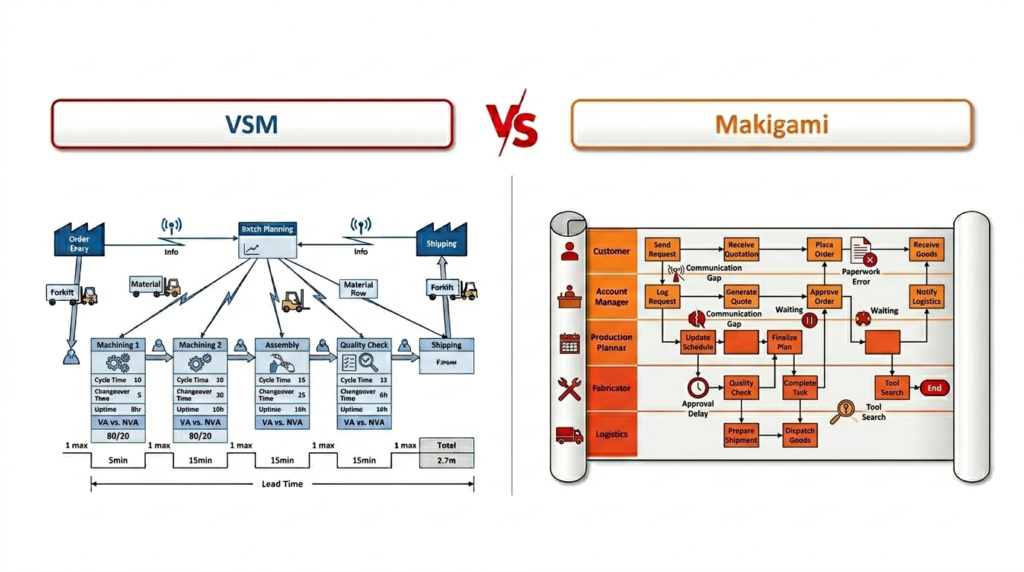
- Value Stream Mapping (VSM): a complete map of the physical and information flows of value-creating activities, highlighting waste and bottlenecks along the production chain.
- Flow Chart: a simple flow diagram representing operational and decision-making sequences, useful for understanding the order of activities and the interactions between departments.
- Swim Lane Diagram: a diagram that divides processes between departments or roles, highlighting responsibilities and interactions between different teams.
- Spaghetti Chart: a representation of the physical movements of materials or people within a department, useful for identifying redundant routes or logistical inefficiencies.
- Process Mapping: a comprehensive tool for documenting, analysing and improving every phase of a business process, from start to finish.
Combined with Lean tools and process parameters (Standard Cycle Times, Cycle Times, Takt Time, OEE), these techniques provide a clear and complete view of processes, facilitating targeted decisions and effective improvement interventions.
The ultimate goal of mapping is to create a lean, consistent workflow in which every activity contributes to the final value, improving the efficiency, quality and sustainability of business operations.
For mapping Production Processes, it is preferable to use the Value Stream Map, which includes all the elements that influence the Process Lead Time, such as warehouse stock, cycle time and machine set-up time.
Makigami is the most suitable tool for mapping the indirect processes typical of offices, where there are many hand-offs between the various functions, both inside and outside the company. The sequence and duration of the individual operations make it possible to highlight redundancies and information loops and to measure the Process Lead Time.
Why Do It
The Benefits of Good Mapping
Implementing a structured process improvement journey brings tangible, measurable benefits for the entire organisation. Companies that adopt Lean methodologies and analysis tools obtain concrete benefits in terms of:
Operational efficiency
Shorter cycle times, elimination of waste and optimisation of resources, making it possible to do more with less
Product and service quality
Process standardisation and continuous production control reduce errors and defects
Team productivity
Clear workflows, well-defined roles and monitoring tools improve individual and team performance
Flexibility and adaptability
Lean, mapped processes enable the company to react quickly to market changes and to new customer needs
Staff engagement
Through active participation in improvement activities, employees develop skills and responsibility, increasing motivation and engagement
Cost reduction
By eliminating unnecessary activities and optimising the use of resources, the company achieves direct and lasting savings
Moreover, process improvement is not a one-off intervention: it becomes an integral part of the company culture, promoting a continuous improvement approach in which every department and every employee constantly contributes to generating value.
The end result is a leaner, high-performing, results-oriented organisation, able to increase competitiveness, customer satisfaction and sustainability in the long term.
Start optimising your business processes
Find out how our tailored analyses can help your company achieve its objectives with precision and effectiveness.