



fischer Consulting’s lean strategic consulting is the perfect combination of high-level planning and the meticulous optimisation of processes. In an increasingly complex and competitive global market, a good strategy is no longer enough if operational processes are inefficient; likewise, efficiency for its own sake does not deliver results unless it is geared towards clear, sustainable business objectives.
Our approach combines Lean Thinking with strategic analysis, transforming the company into an agile organism, able to eliminate waste while at the same time positioning itself for long-term growth.
Lean strategic consulting is the support that helps companies and managers define clear objectives and choose the most effective actions to achieve them, while optimising every phase of the value chain.
While strategic consulting analyses the competitive position and identifies opportunities and threats, lean consulting focuses on the systematic identification and elimination of waste (muda). Together, these two approaches make it possible to:
Analyse the competitive position with reliable data.
Plan investments and resources in a targeted way.
Optimise processes to increase competitiveness.
Translate strategy into measurable, concrete operational actions.
The five fundamental principles of Lean are:
Define what constitutes value from the customer’s point of view.
Map all the activities needed to deliver a product or service to the customer, eliminating those that add no value.
Make sure that the production process flows without interruptions.
Produce only what customers require, reducing overproduction waste.
Promote continuous improvement, always striving for excellence.
The Lean method originated with the Toyota Production System in the 1950s and is a systematic approach to improving business processes by eliminating waste and increasing quality.
The fundamental principle of Lean Transformation is to create more value for the customer using fewer resources. In other words, it is about continuously optimising production and organisational flows to ensure greater competitiveness and sustainability.
The Lean consultant acts as a facilitator of change.
Their goal is to optimise business processes, reduce cycle times, improve quality and engage staff in a continuous improvement journey.
A Lean consultant works through the following steps:
Footwear and retail
Objective: optimise European logistics using Lean principles to support the group’s sustainable growth.
Bata chose fischer Consulting to review its European logistics set-up, with the aim of reducing operating costs and improving process efficiency by applying the Lean Manufacturing philosophy. Thanks to our approach based on the RADAR method, we analysed 31 performance factors to map inefficiencies and waste across the entire logistics network.
The main results were:
Confirmation of the 3PL provider with the best Lean score in terms of efficiency and cost/quality ratio,
Elimination of waste and optimisation of operational flows,
Creation of scalable logistics that support long-term growth.
A concrete example of how Lean Manufacturing can transform complex operations into lean, high-performing processes.
Our proprietary method, the fischer Process System (fPS), stems from the international experience of the fischer Group and is based on a structured model that combines vision and operations.
Process improvement cannot be achieved through theory alone: concrete tools are needed to analyse, optimise and monitor business activities. Lean consultants use proven tools to ensure measurable, sustainable results, adapting them to the specific needs of each organisation.
The main tools include:
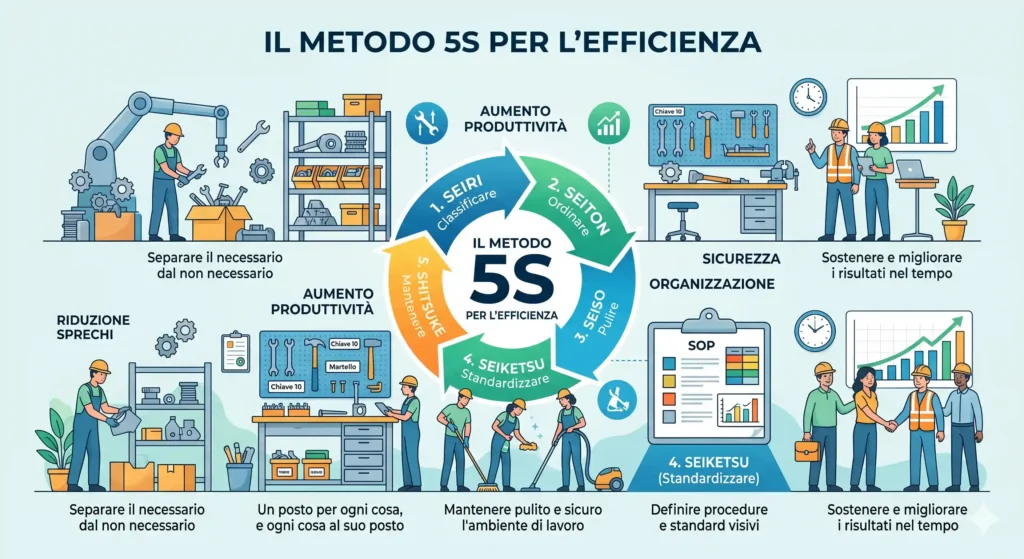
This method focuses on organising the workplace through Sort, Set in order, Shine, Standardise and Sustain, thereby reducing waste and increasing productivity (in Japanese: Seiri, Seiton, Seiso, Seiketsu, Shitsuke).
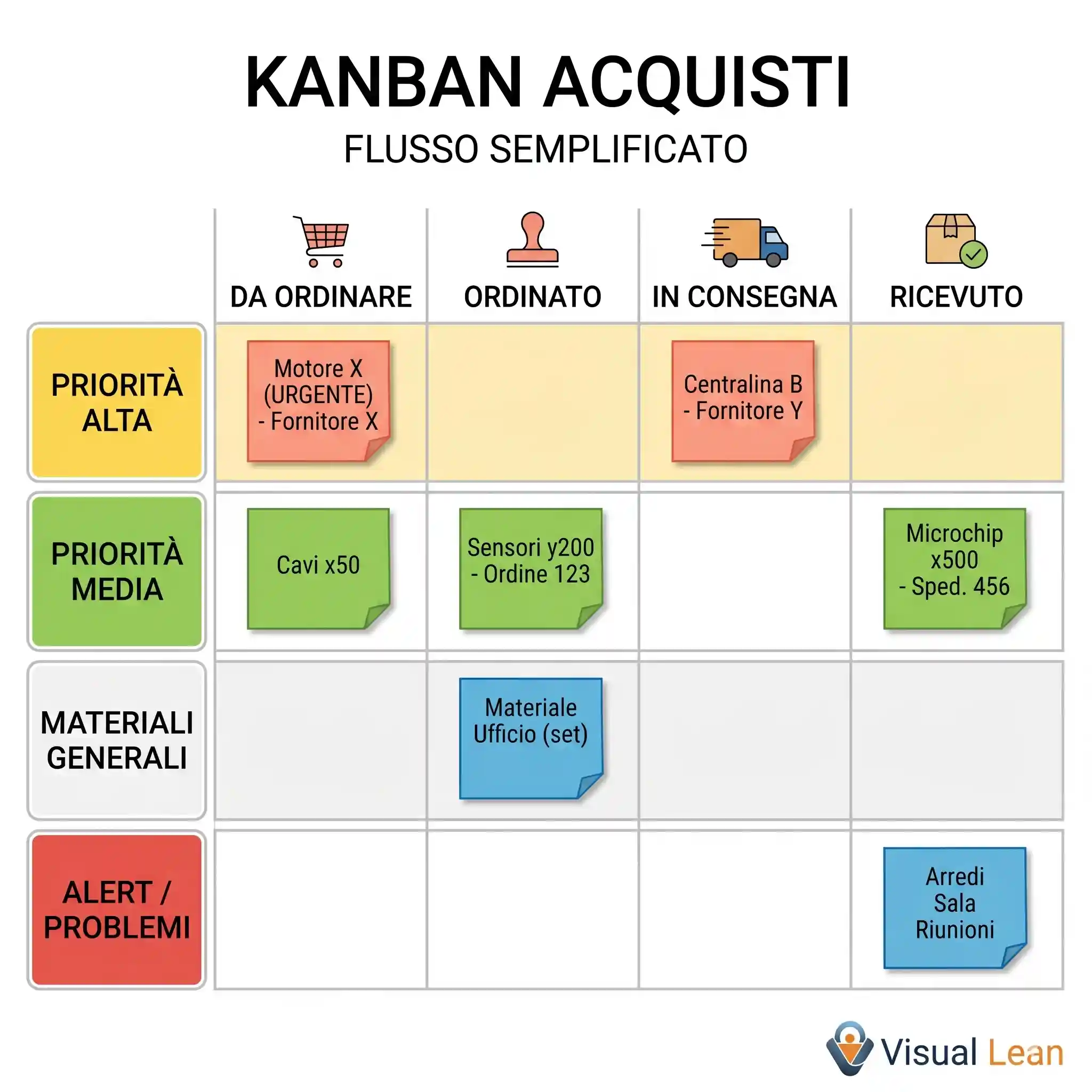
Kanban is a visual method for managing production and workflow. Using cards and signals, Kanban helps to coordinate activities, reduce excess inventory and identify resource overload or under-utilisation.
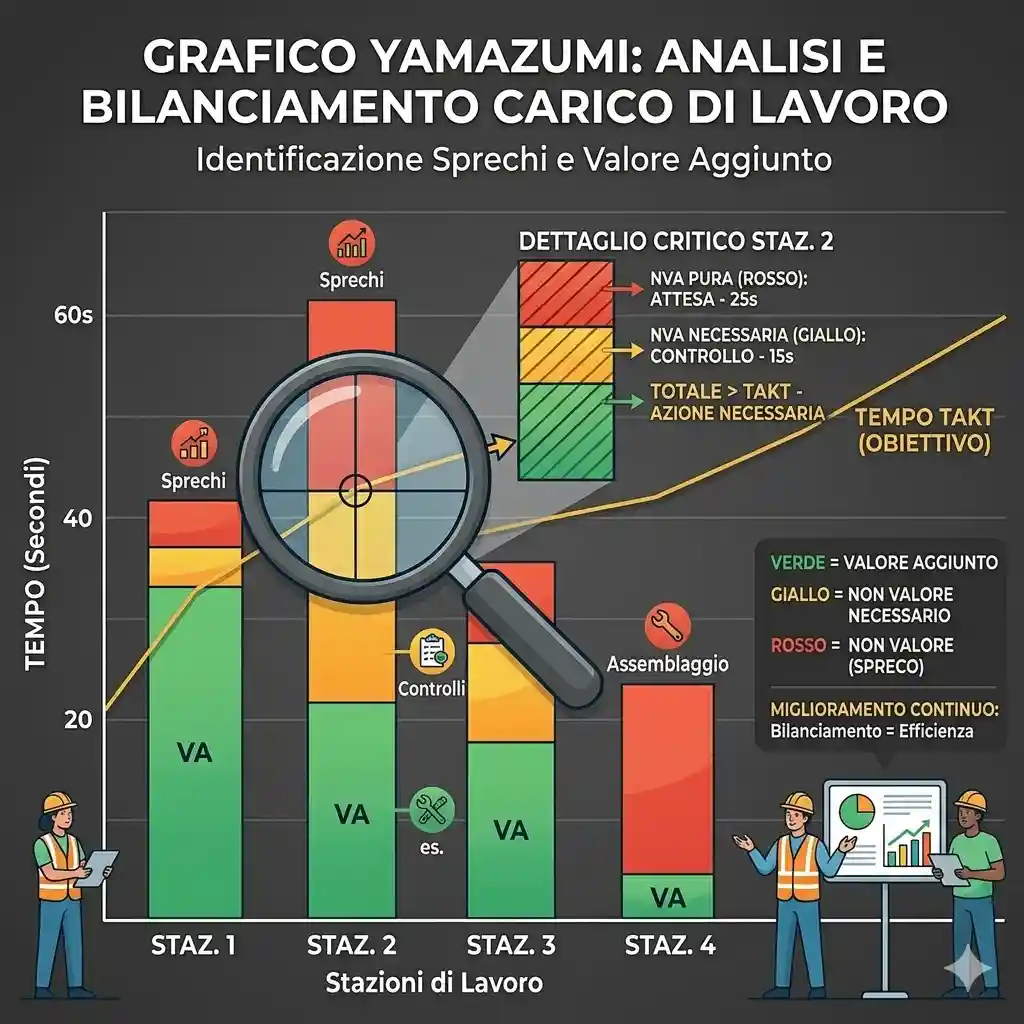
This tool is used to analyse and balance the workload between workstations in a production process. By visualising cycle times and activities, the Yamazumi Chart helps to identify critical points and optimise the allocation of resources.
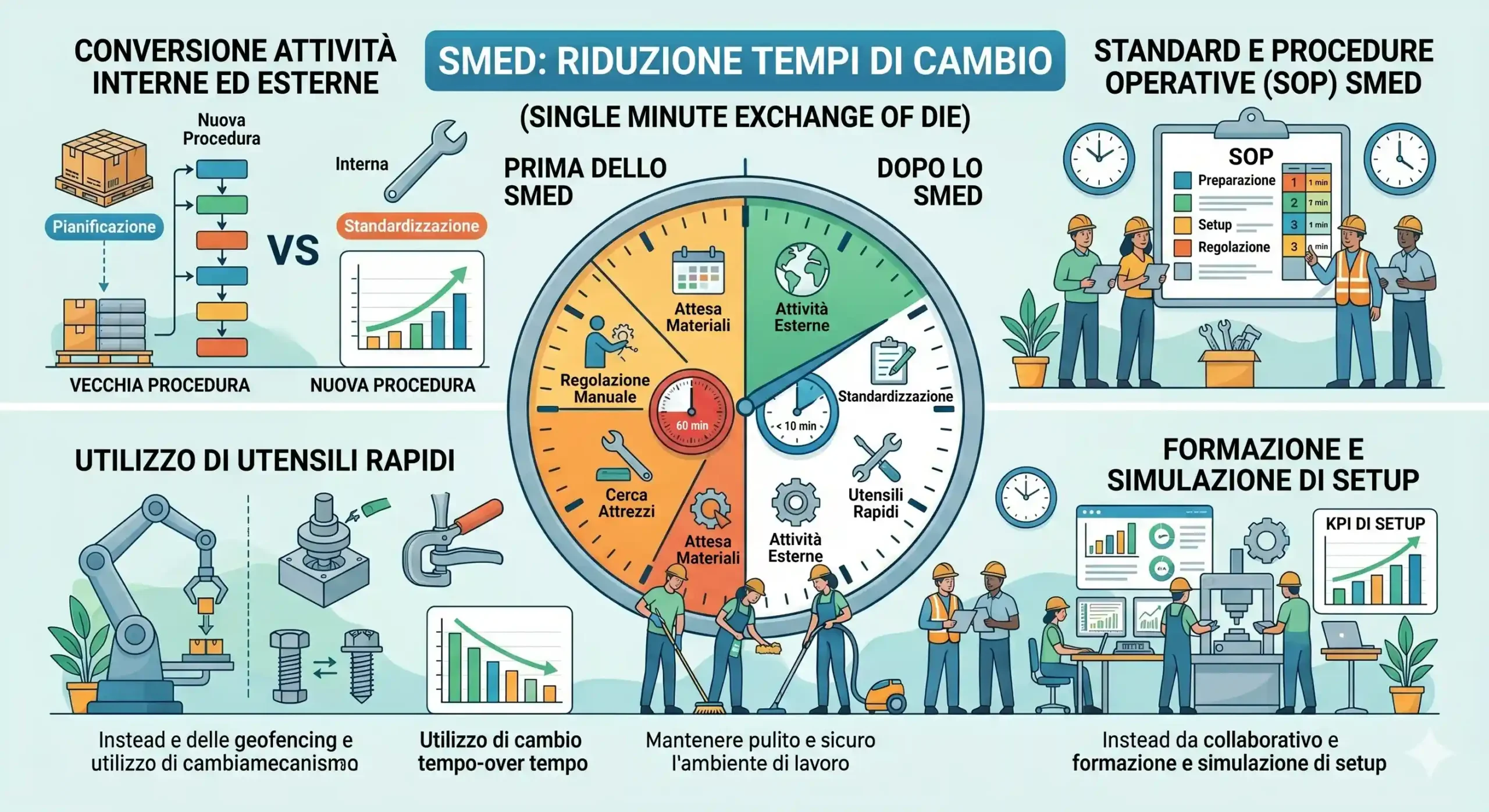
SMED is a methodology for reducing changeover times between production runs. By optimising machine set-up and standardising procedures, companies can reduce downtime and increase operational flexibility.
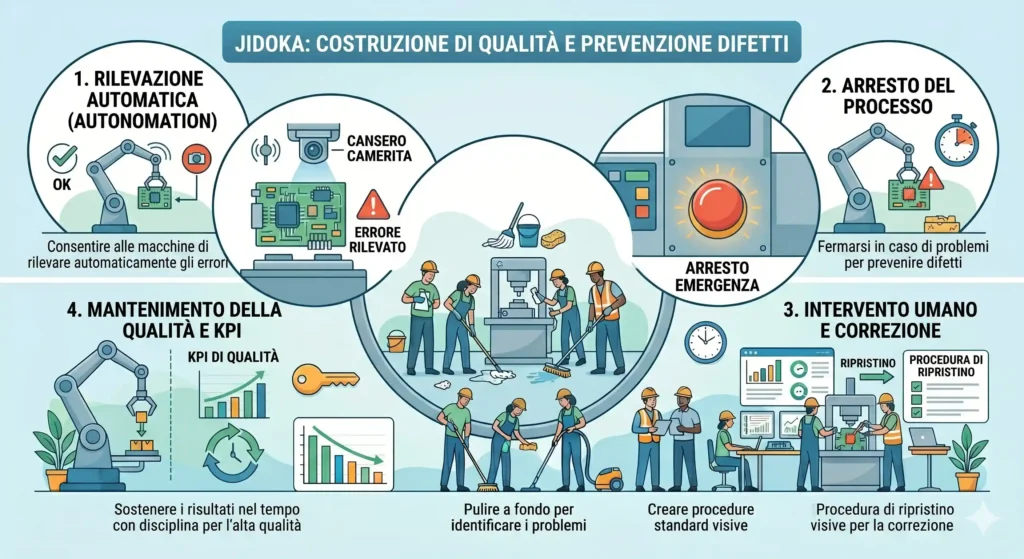
This concept refers to building quality into the production process, enabling machines to detect errors automatically and stop when a problem occurs. Applying Jidoka helps to ensure high-quality production and to prevent defects.
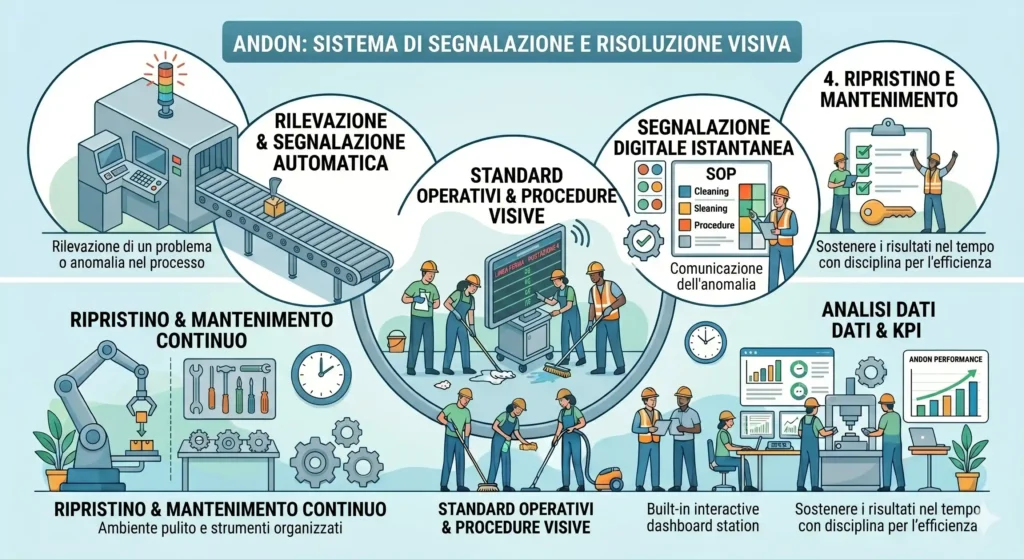
A visual signalling system used to communicate problems or anomalies in the production process immediately. Its implementation promotes transparency and responsiveness, enabling timely intervention to solve problems.
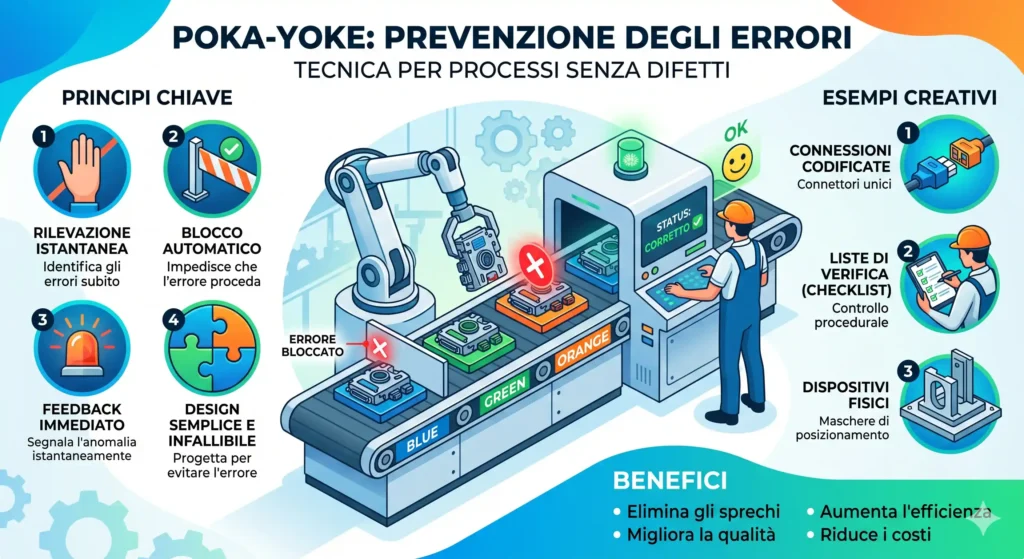
This technique aims to prevent errors or defects through the design of processes or devices that stop errors from occurring. Poka-yoke solutions are often implemented creatively to ensure that operations are carried out right first time.
This approach uses signage, charts and visual indicators to communicate critical information on the status of processes and performance, helping to keep the focus on continuous improvement and fostering a results-oriented culture.
In modern companies, strategic decisions must be based on solid, up-to-date data. That is why information systems are a fundamental lever: they collect, process and distribute the information that guides managers and employees in their day-to-day and strategic choices.
At fischer Consulting we offer specialist expertise in:
to ensure integrated processes aligned with business objectives
rigorous management of time, budget and results
performance evaluation, data security and technological resilience
creation of management dashboards and reporting systems that support fast, data-driven decisions.
ERP (Enterprise Resource Planning) systems have two fundamental characteristics:
Common database → ensures consistent information that is accessible in real time
Modular structure → allows flexibility in choosing between “one-stop-shop” or “best of breed” solutions, depending on the company’s needs.